Build roundup: busier boards, steadier dock work, and what's next
Portbound Seas has had a cluster of recent improvements around contract readability, dock-side reliability, and weather planning. At the same time, the game is getting clearer about what belongs in the near-term Great South Bay build and what still needs deeper shaping for the larger shared-world future.
What has improved recently
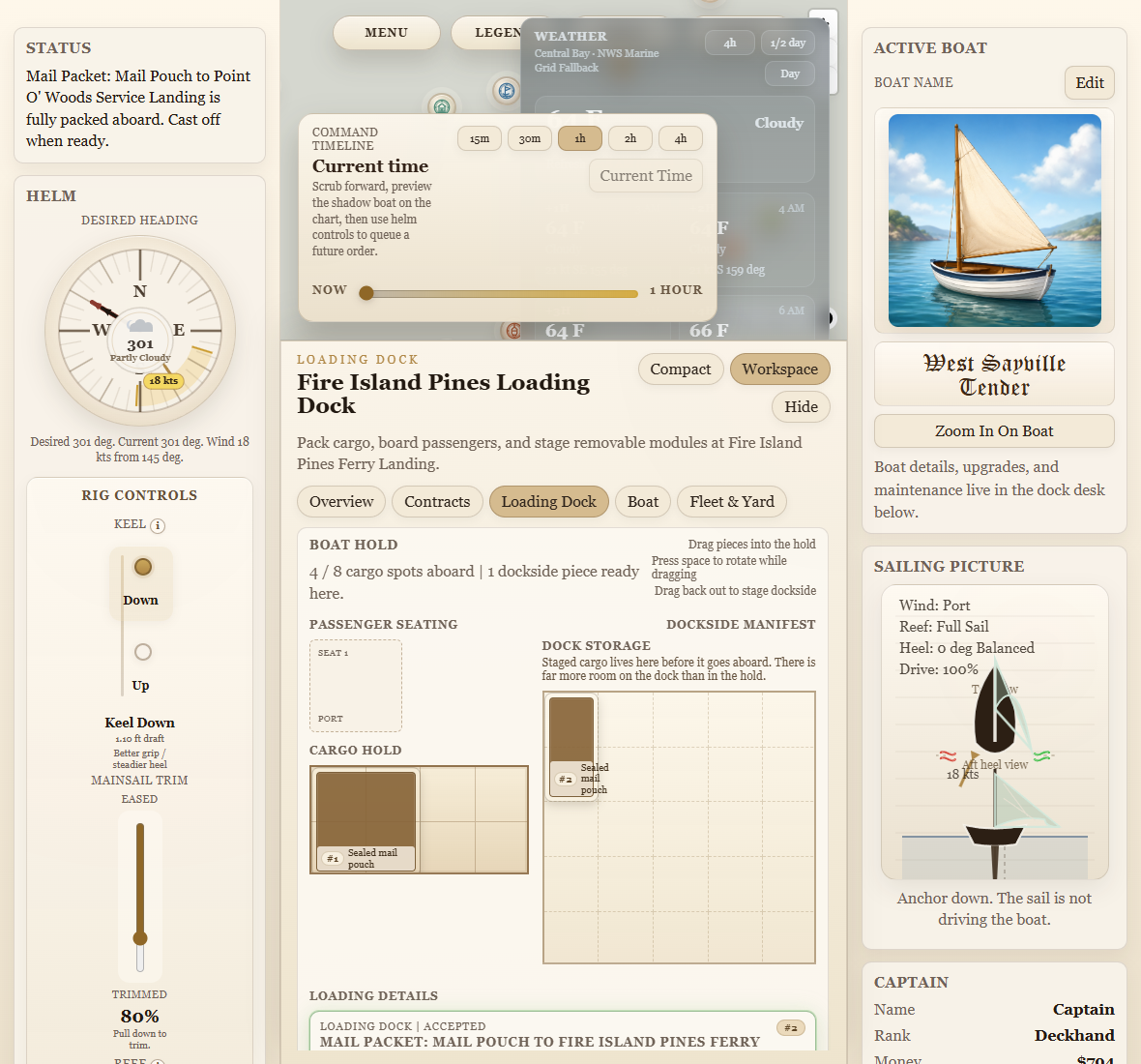
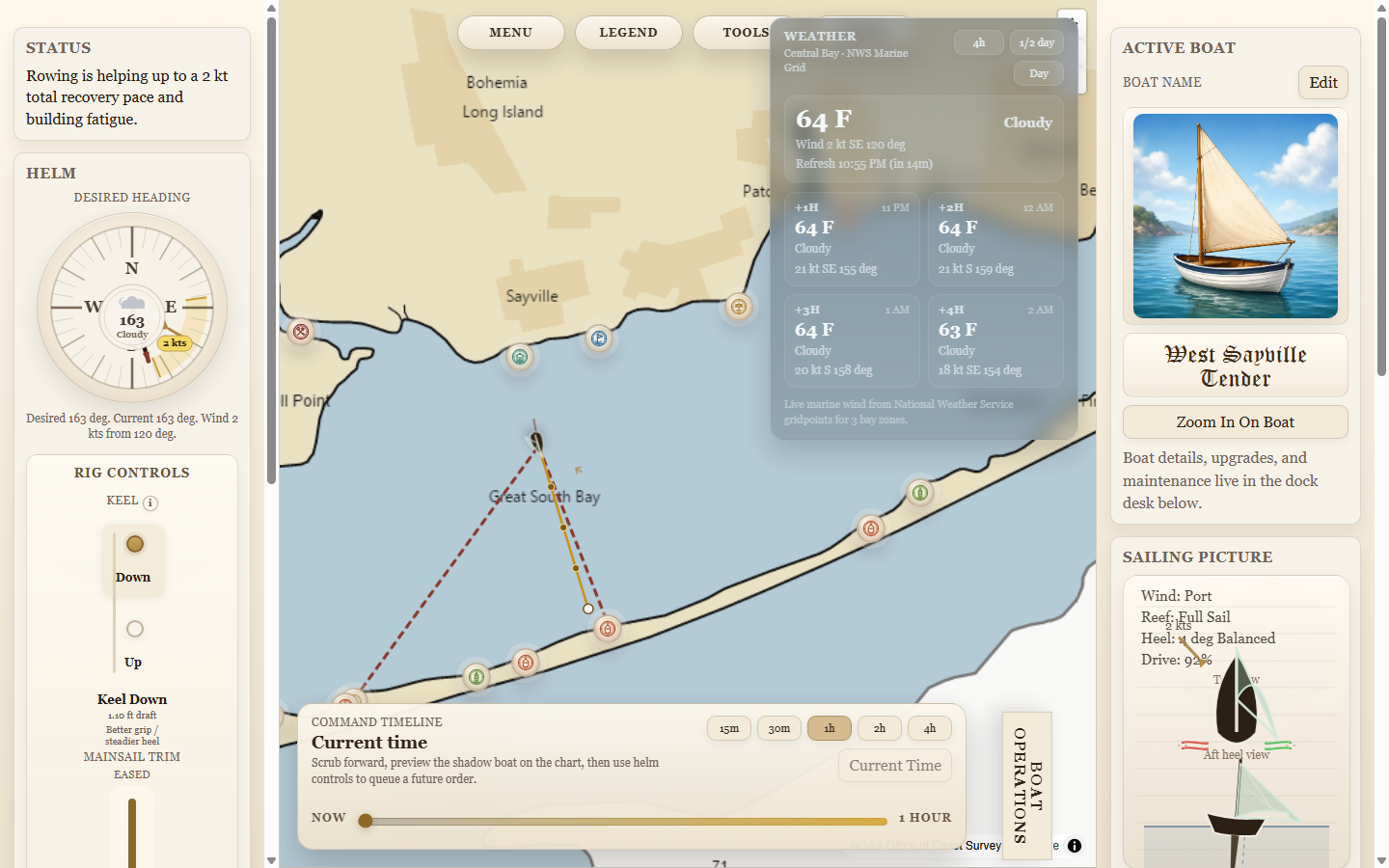
The most useful way to describe the current build is not "everything changed." It is that a handful of practical systems got sturdier and easier to read. Recent updates included clearer near-term weather planning, repeated-contract labels, stronger first-click behavior in the dock workflow, denser contract boards shaped by dock traffic and the active fleet, and a loading-dock layout fix that restored reliable cargo transfer at narrower desktop widths.
That last point matters because it reflects a larger theme. Portbound Seas is trying to be a game where the player can trust what the interface is showing. If cargo looks draggable, it should actually drag. If a contract board looks busy, it should be busy for reasons that match the world. If a forecast window is present, it should help the player make better local sailing decisions instead of just filling space.
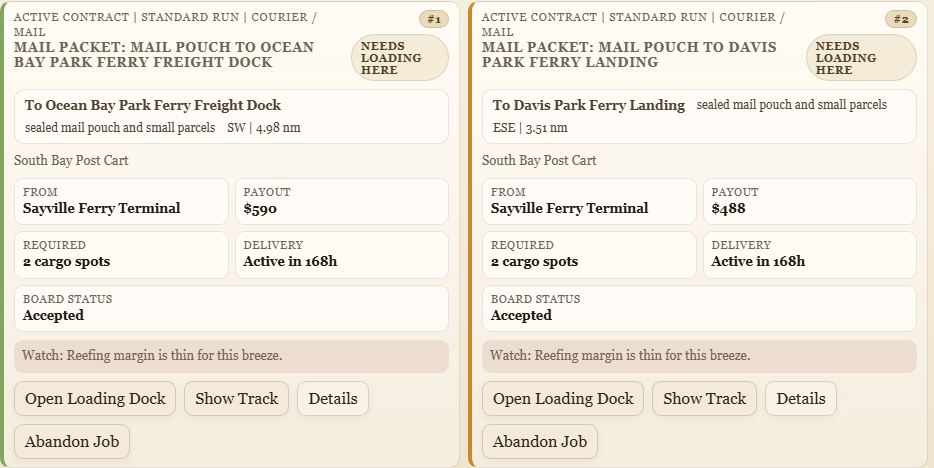
Why the contract board matters more now
One recent server-side pass moved contract density away from a simpler fixed-board model and toward traffic-tiered docks with broader active-fleet awareness. In plain language, that means a bigger or busier dock can sustain a busier live board, and the available work is starting to care more about the kinds of boats active in the world rather than only the one boat the player happens to be sailing right now.
That does not magically turn the game into a full port economy. It does, however, make the current Great South Bay loop feel a little more like a working waterfront and a little less like a static menu.
What seems to matter next
The implementation board is still focused on smaller, credible steps rather than giant all-at-once features. The current near-term runway centers on wind-aware ETA and route feasibility, followed by nearby readability and quality-of-life work like a dedicated depth readout, a Sailing Picture trim-response fix, and the first at-sea status and maintenance layer.
In other words, the immediate direction is still about making Great South Bay sailing easier to read, easier to plan, and easier to operate without losing the sailing-first identity.
What is still being shaped
Some of the broader ideas are real directions, but they are still being shaped rather than treated like finished promises. That is a healthy change because it keeps the public picture honest.
- Shared-world groundwork is still about making the multiplayer future credible instead of hand-waving it into existence.
- Harbor and shore interaction still needs careful shaping so docking, harbor traffic, and shore access feel like one system instead of disconnected features.
- Trading and port economy still needs a measured first loop that complements contracts and cargo handling without pretending the whole waterfront simulation is already here.
That distinction matters because it keeps "future direction" honest. These are real plans, but they are still future work rather than shipped features.
Where that leaves the game
Portbound Seas still starts in Great South Bay, and that remains the right lens for understanding the current build. The project is trying to make one bay feel credible first: real weather, real depths, persistent boats, contracts, cargo, repairs, and seamanship tradeoffs that actually affect local decisions.
The larger shared-world future is still there, especially around multiplayer groundwork and broader harbor and economy planning. But the immediate work is still about earning that future with smaller merged improvements that make the current bay better, clearer, and more trustworthy.