Blog
Notes on building Portbound Seas as a shared-world persistent sailing game: visible player boats, timelines, movement, contracts, shallow water, repairs, atmosphere, and the tradeoffs behind each system.
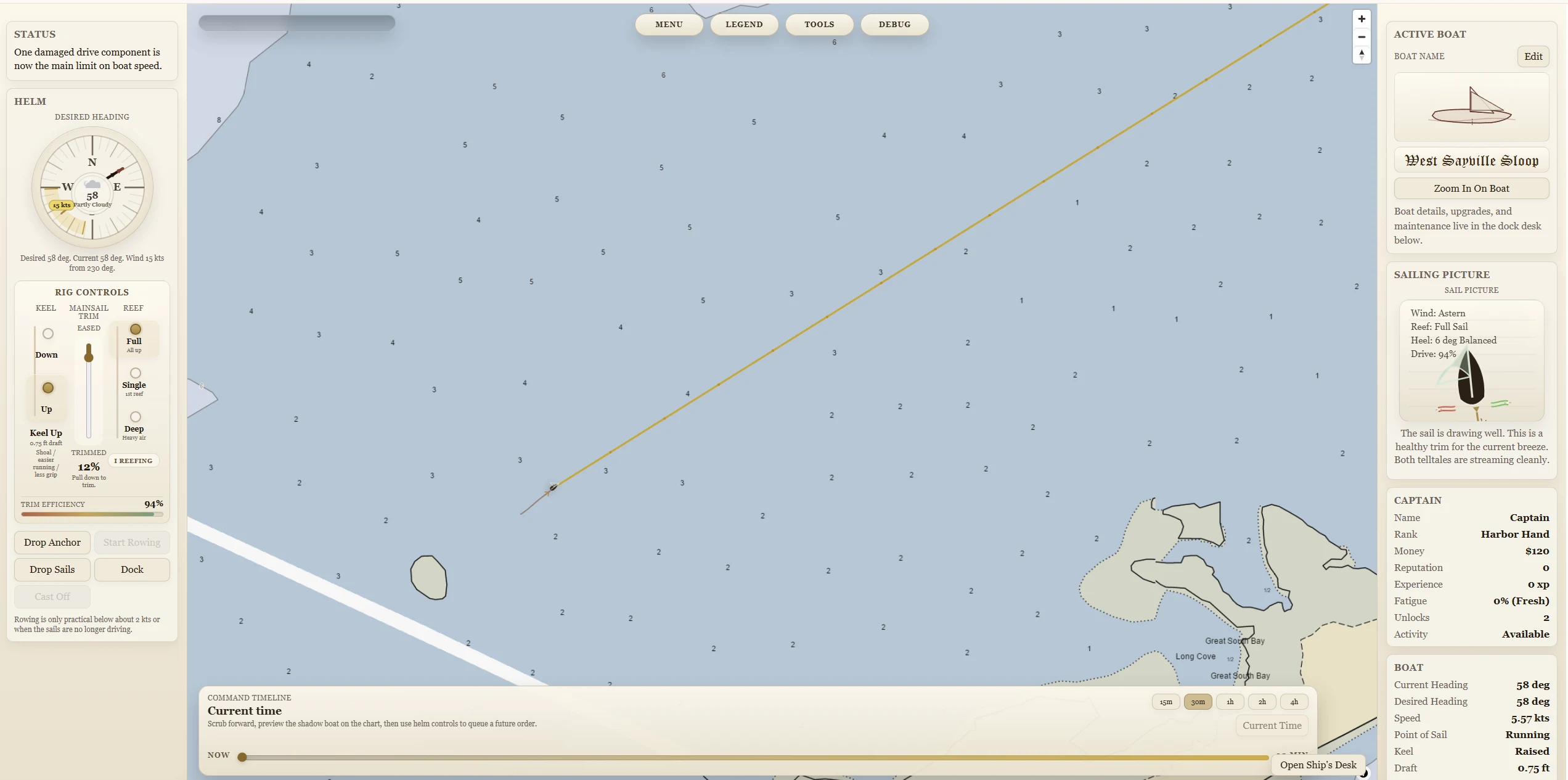
Future commands, waiting, and the command timeline
Sometimes sailing means waiting. The command timeline lets Portbound Seas turn that waiting into planning instead of dead time.
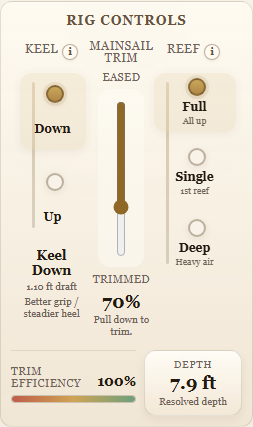
Hyper-local depth and why shoal water matters
Great South Bay is interesting because depth is not abstract. The chart matters, the draft matters, and now the helm carries that local depth truth more directly.
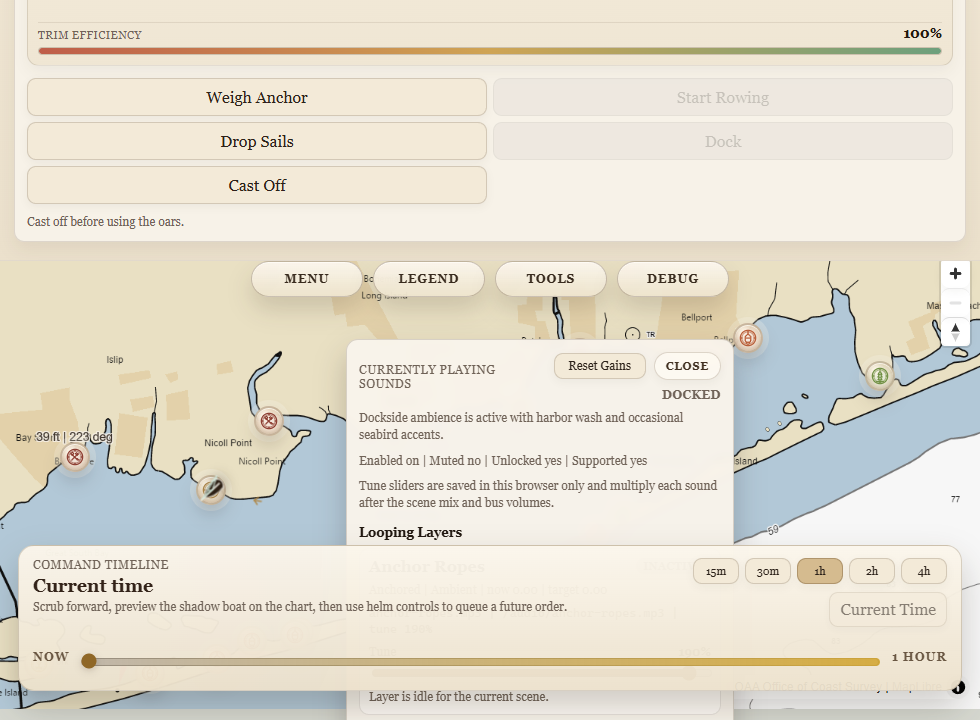
Hyper-local sound: when weather and seamanship become audible
Rain, wind, docked calm, underway exposure, trim complaints, and warning cues all help Portbound Seas sound more like a real working bay.
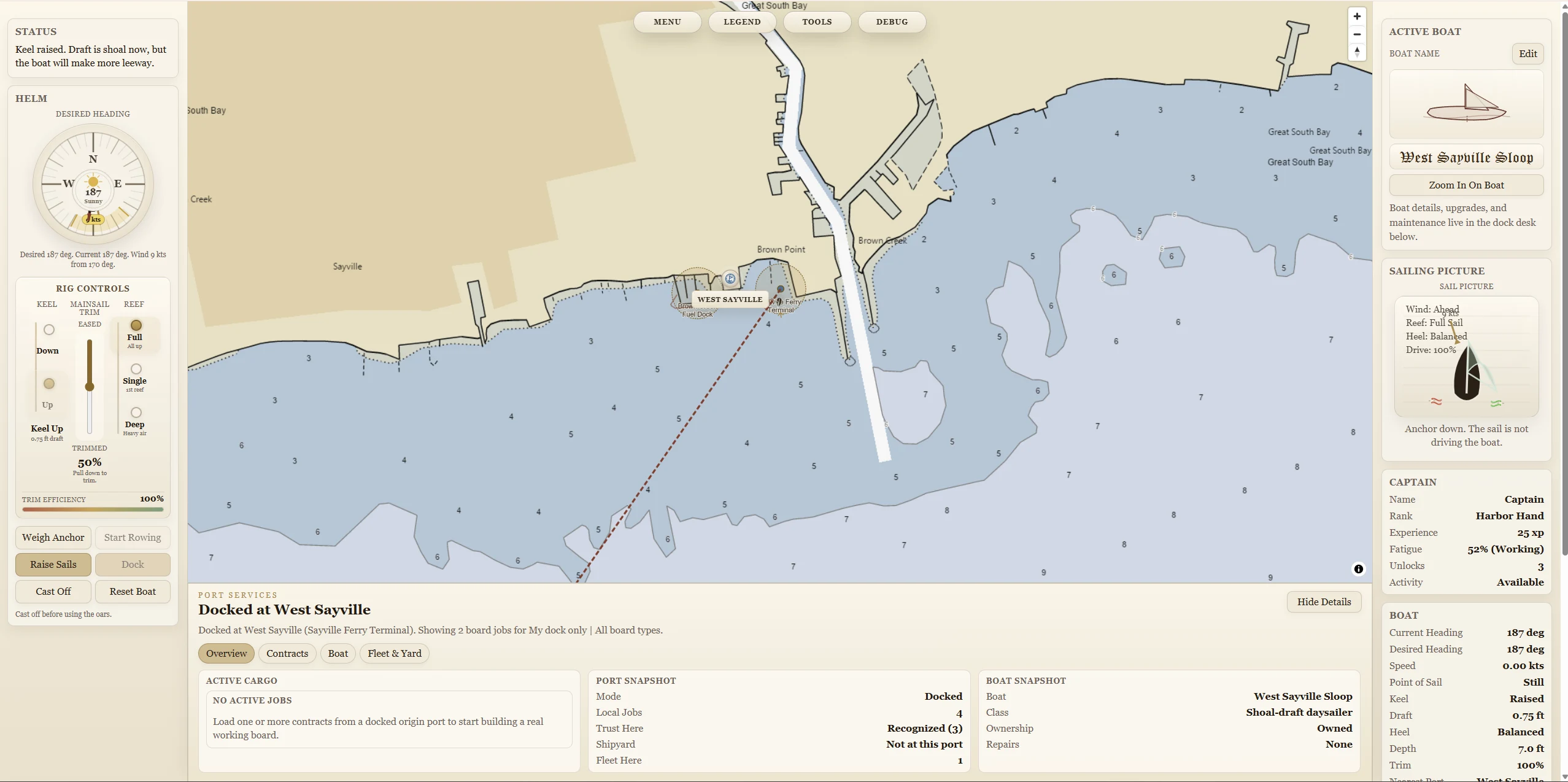
Fog of war, local knowledge, and a more compelling bay
The broad bay should stay readable, but the most detailed local chart knowledge could become something the player earns by sailing, returning, and buying maps.
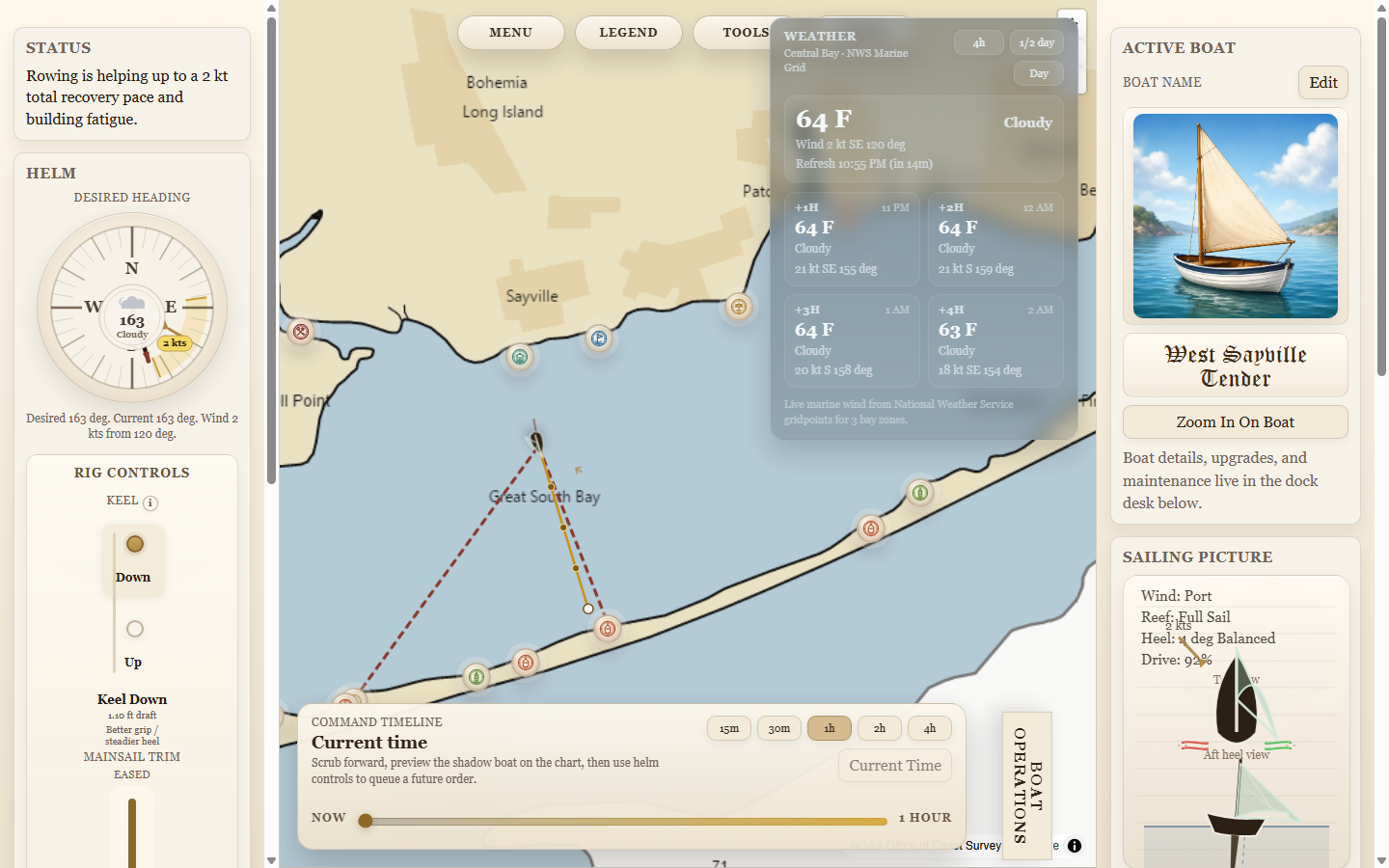
Build roundup: busier boards, steadier dock work, and what's next
Recent improvements have made boards, dock-side workflow, and weather planning easier to trust, while the next Great South Bay passes clarify what comes next.
Weather planning and dock-side clarity
Short-horizon forecast planning, clearer repeated-contract labels, sturdier dock controls, and gentler harbor audio transitions are now in the build.
Command timeline and persistent voyage planning
How future orders, ghost-boat previews, and realistic time-based movement support a boat that keeps sailing while the player is away.
Future state: trade, tides, crew, and a fuller bay
What the longer-term direction looks like for contracts, trading, chart knowledge, life aboard, boat choice, and a denser Great South Bay with more persistent boats on the water.
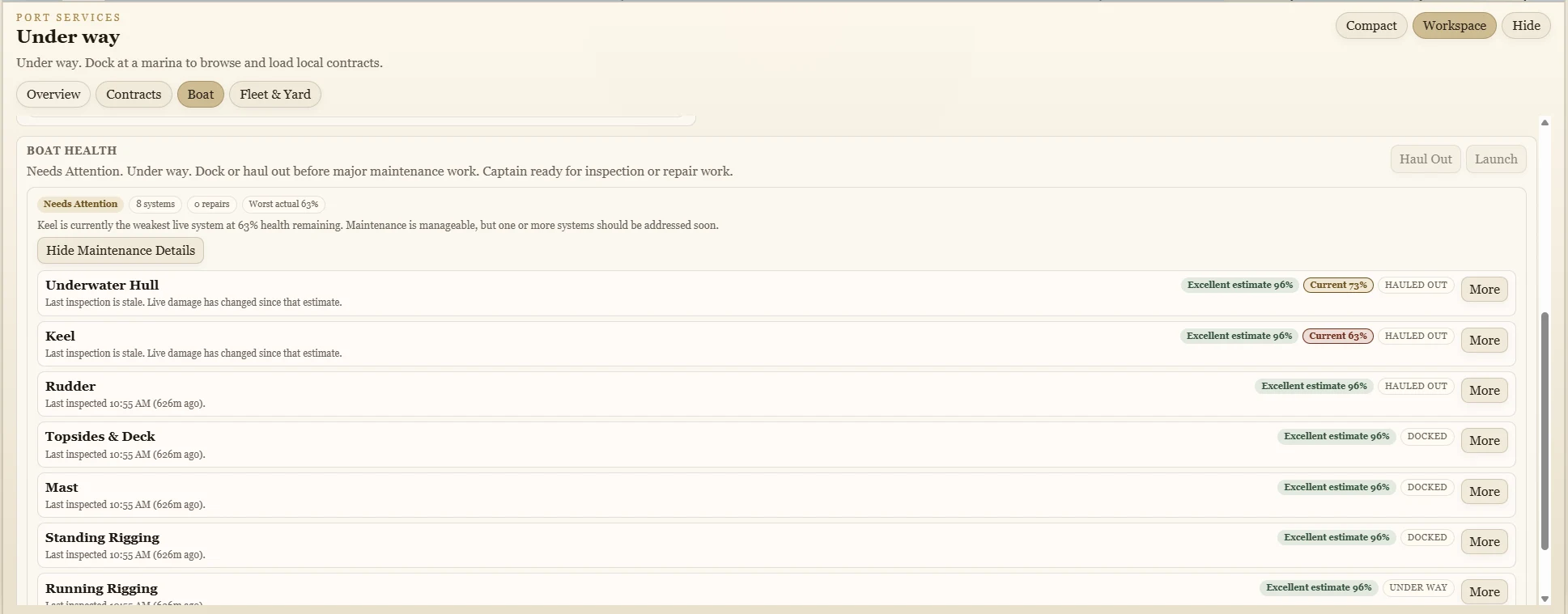
Damage, inspection, and repair choices
Why hull, keel, and rigging damage should feel specific, and how self-repair versus shipyard work creates a real tradeoff.
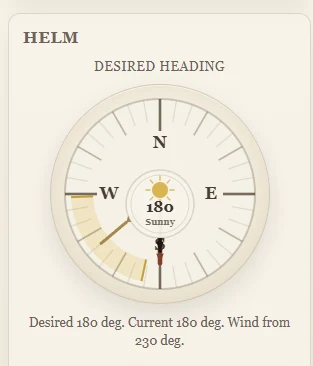
From heuristics to a per-boat sail-force model
Why heel, reefing, keel position, and leeway should emerge from the same per-boat force model rather than one shared curve.
Keel position and shoal-water tradeoffs
Why retractable keel position should matter for shoal access, heel, leeway, and handling.
Rowing and human-power maneuvering
Why an age-of-sail game still needs a limited low-wind recovery tool without turning into a motorboat sim.
Soundscape and environmental audio
How calmer harbor and sailing ambience helps a persistent bay feel inhabited without becoming noisy.
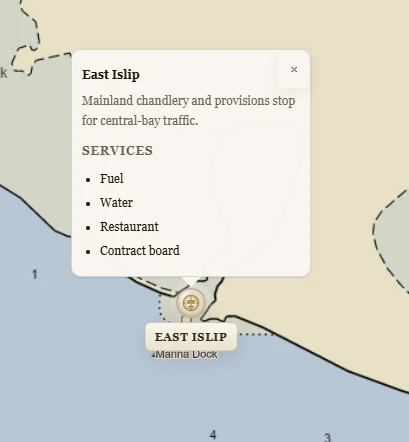
Contracts, grounding, and clearer test tools
Making jobs readable, cargo handling explicit, shallow-water behavior consistent, and testing faster.
Sailing feel and deeper systems
A development note on speed, trim, rowing, boat condition, and turning sailing realism into understandable player tradeoffs.
Early prototype: making the bay playable
Stabilizing the first playable world, reducing interface clutter, and preparing the prototype for gameplay testing.
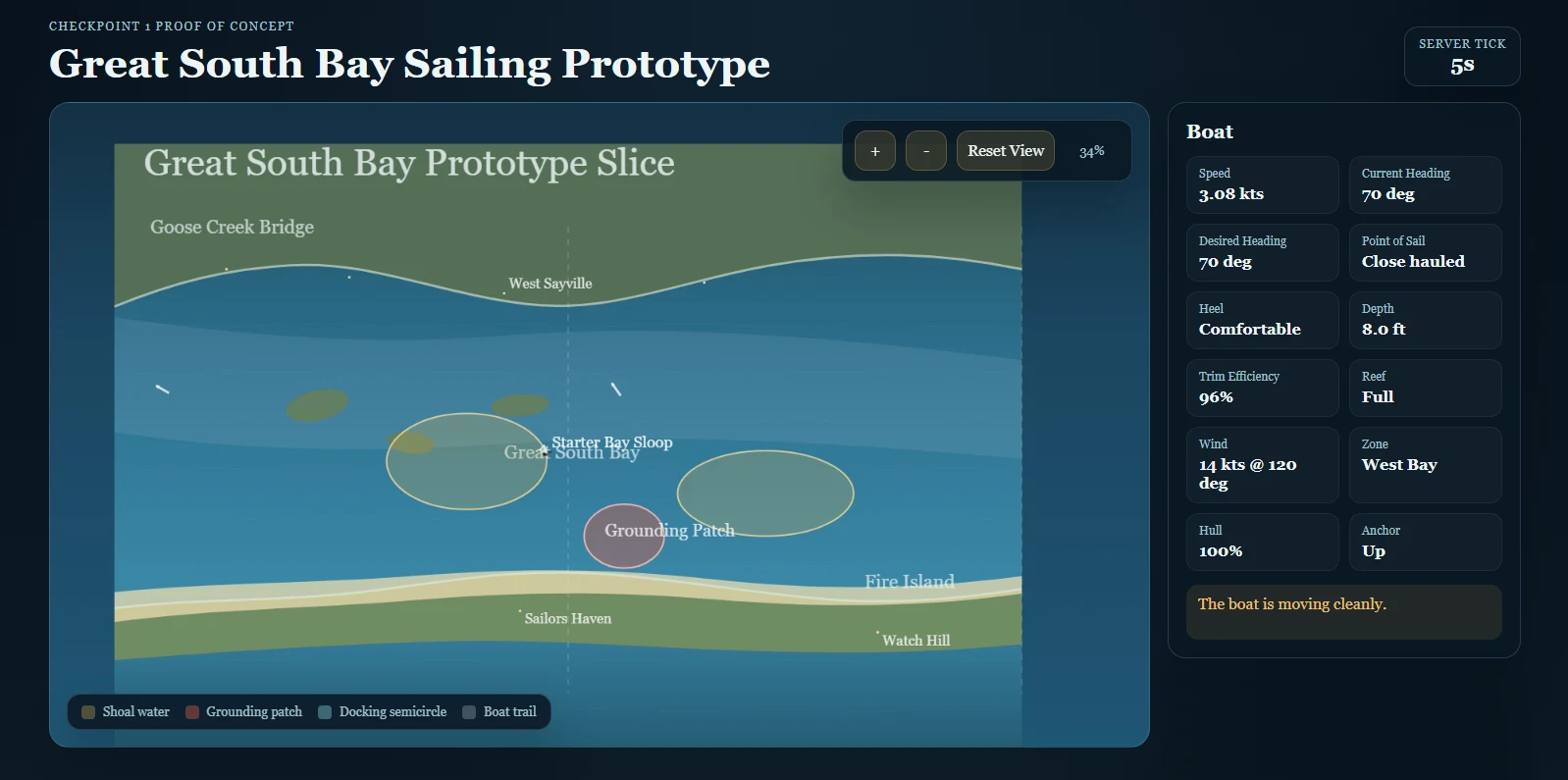
Prototype proof of concept
How the original Great South Bay sailing prototype proved the basic loop before the game moved toward the current NOAA chart-first interface.