Portbound Seas starts in Great South Bay as a persistent sailing game where your boat keeps moving on real elapsed time.
Real weather, chart depths, dock jobs, loading decisions, component damage, and quiet stretches under sail all shape the same shared bay.
The longer-term direction is broader shared-world sailing, built outward from one credible region at a time.
Follow development on the blog or subscribe via RSS.
Current build Great South Bay chart view, dock services, helm controls, contract boards, and live navigation data in one surface.Dock workflow Cargo packing, dockside staging, and contract prep now live inside the current bay loop.
Great South Bay first
The game starts with one shallow, local-knowledge-heavy sailing ground where weather, draft, dock approaches, and shoreline shape the route.
Shared elapsed time
Your boat and other players' boats remain out in the same bay, with time passing whether captains are online right now or not.
Practical dockside work
Contracts, loading, repair choices, and port services are part of the sailing loop rather than disconnected side menus.
What is in now, what is next, and what is later.
The current merged build already supports a real Great South Bay sailing loop. Recent passes tightened route planning,
depth readouts, dock boards, loading-dock usability, weather reading, audio transitions, and at-sea reporting, while
the next runway stays focused on clearer handling and richer local decision making.
Now in the build
Playable persistent bay
The current build already supports the core sailing loop rather than only describing it.
Persistent elapsed-time sailing in a shared Great South Bay world
Command timeline scheduling for later heading, trim, reef, and anchor orders
Wind-aware ETA guidance, route feasibility notes, and projected future-track preview
Real weather, chart-depth navigation, dedicated depth readout, and shoal-water labels
Contracts, cargo loading, dock services, active ledgers, and traffic-tier board scaling
Damage, repairs, rowing recovery, calmer condition-aware bay audio, and at-sea status reporting
Current development
Near-term runway
The next development passes stay close to readability, harbor handling, and dockside consequences instead of pretending the world is finished.
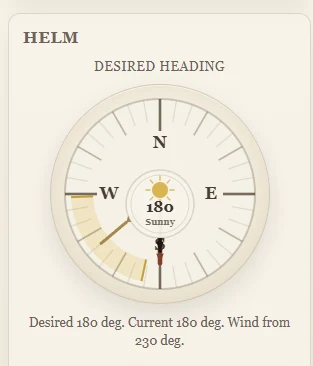
Helm and Sailing Picture polish that makes wind, trim, and boat state easier to read
Harbor maneuvering, close-quarters feedback, and clearer service visibility on the map
Longer dockside prep, partial-load flow, and stronger local consequence layers
Planned direction
Deeper charts and working-bay life
Later roadmap work deepens the same bay with more reasons to read local conditions well and choose the right boat for the job.
Fog-of-war chart detail and purchasable local map coverage
NOAA-backed tides affecting effective depth, with currents planned as a later layer
Harbor maneuvering follow-through, trade economy, crew, and a wider shared-world future
A persistent sailing world, built from one real bay.
Portbound Seas is not built around short isolated runs. It starts with Great South Bay as a shared persistent sailing ground where
boats, weather, depth, dock activity, damage, and passage timing continue to matter while the player is away.
Set a course. Let the bay keep moving.
The game is designed around real passage time in a shared bay. A crossing should feel like a small voyage, with other boats still out there moving, waiting, loading, docking, and persisting between check-ins.
Offline movementThe boat continues sailing while you are not actively online.
Shared persistent bayOther players' boats remain in the world too, so the bay stays inhabited even when captains log off.
Future commandsQueue later heading, trim, reef, or anchor orders so you do not need to babysit the helm through every waiting stretch.
Weather windowsWind and conditions are based on real-world weather inputs, and route guidance responds to them.
Hyper-local depthCharted depth, draft, and shoal-water labels are part of navigation instead of background art.
Why Great South Bay first
Great South Bay is a good proving ground because the same region can support shallow-water routing, dock clusters, local knowledge, and a future wider-world sailing direction.
Shallow approaches and draft tradeoffs matter early
Harbors, ferries, and small working stops create believable short-voyage jobs
The long-term world can grow outward from one credible first region
What the current build already asks of you.
No engines. No easy shortcuts. The current build already focuses on route timing, weather angle, dock workflow, shallow approaches,
changing boat condition, and the practical tradeoffs that come with moving by sail alone.
↗
Plan ahead, not just right now
Wind angle, route feasibility, ETA windows, and the command timeline all shape when to hold course, when to turn later, and what orders to leave behind before stepping away.
▣
Work the dock
Contracts, loading docks, active ledgers, repair options, and local services make each stop part of the game rather than just a pause screen.
≈
Read the boat and bay
Keel position, trim, draft, grounding risk, component damage, and the current soundscape all help tell you how conditions are changing.
Current build snapshots
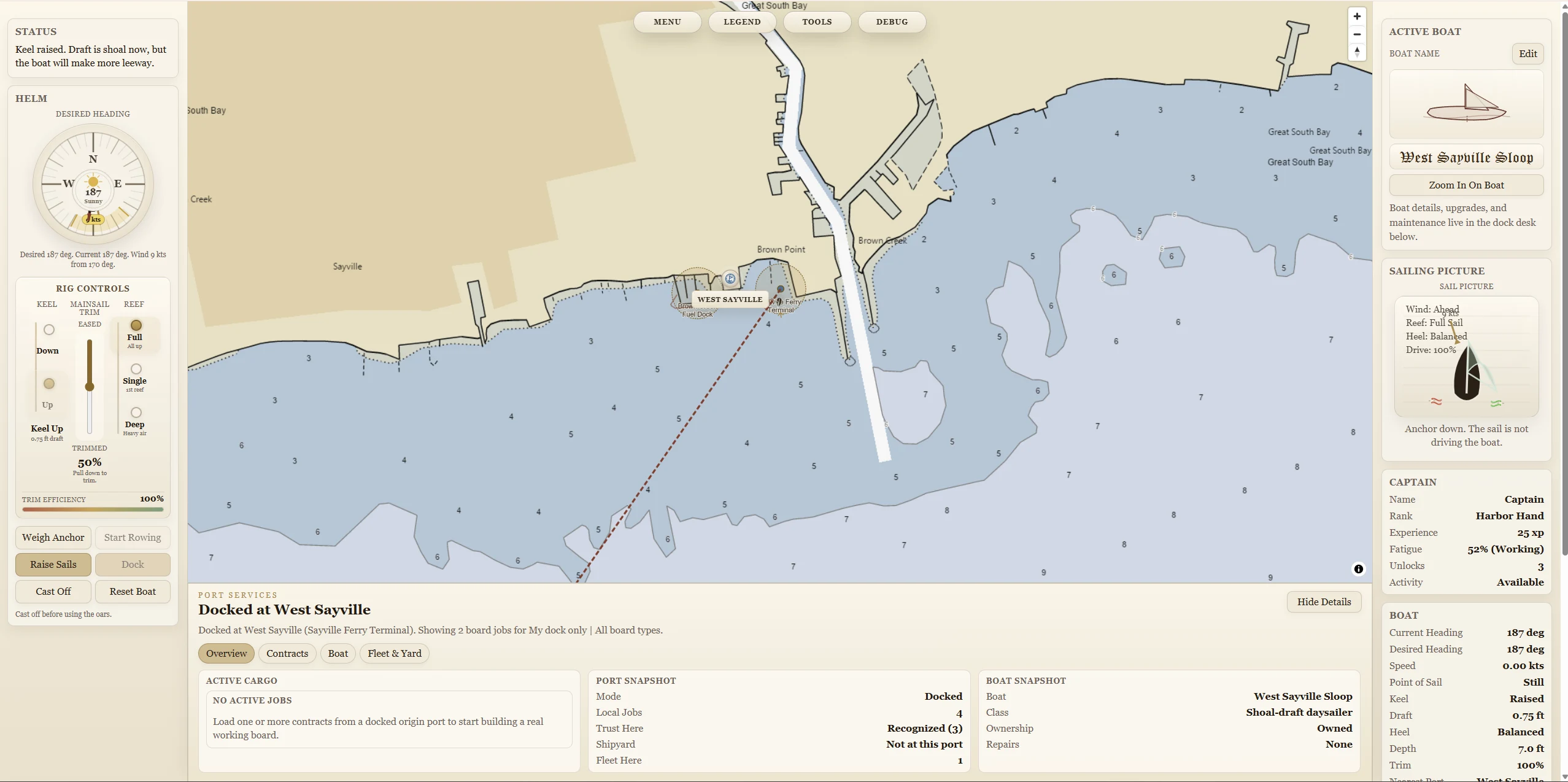
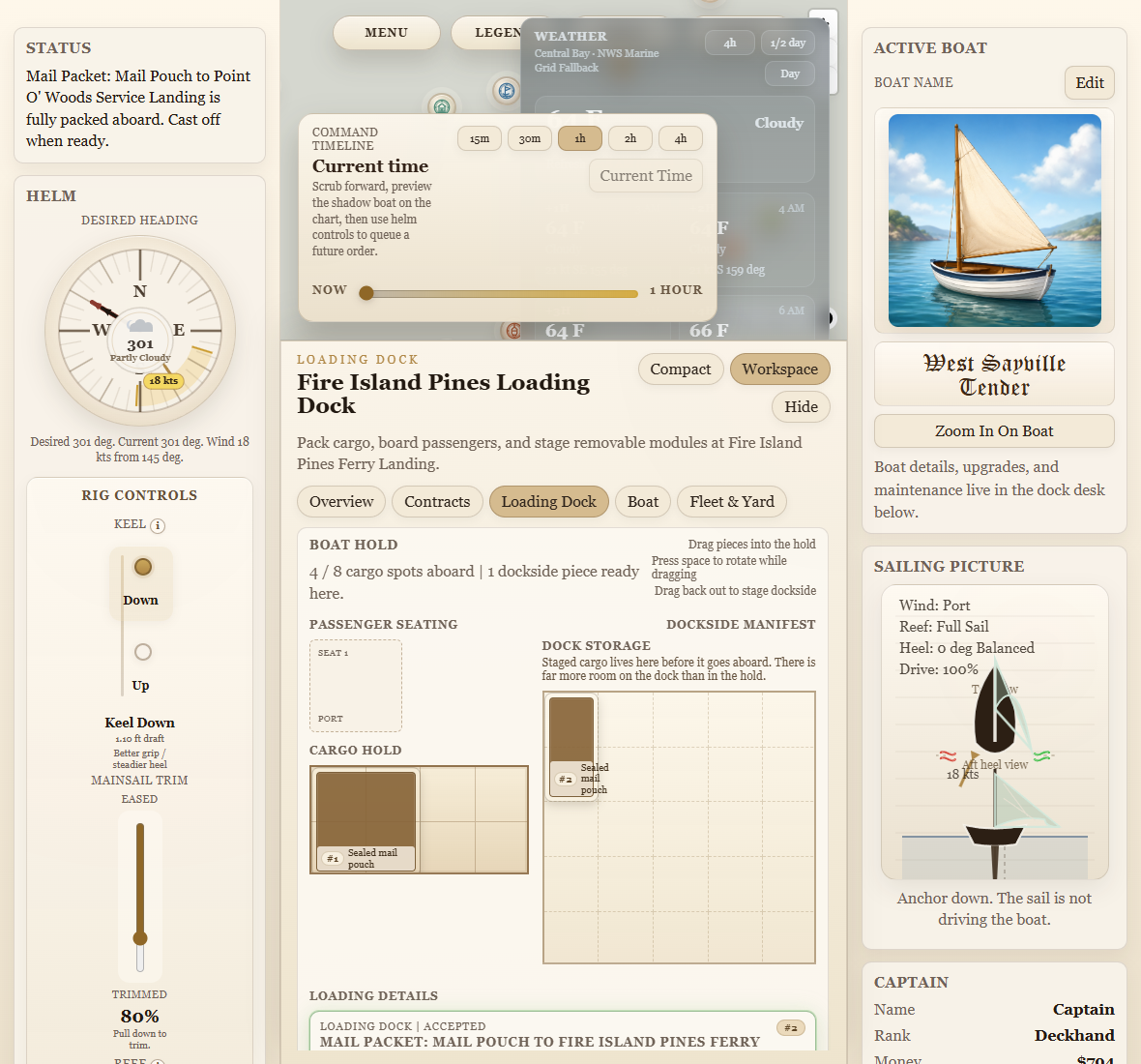
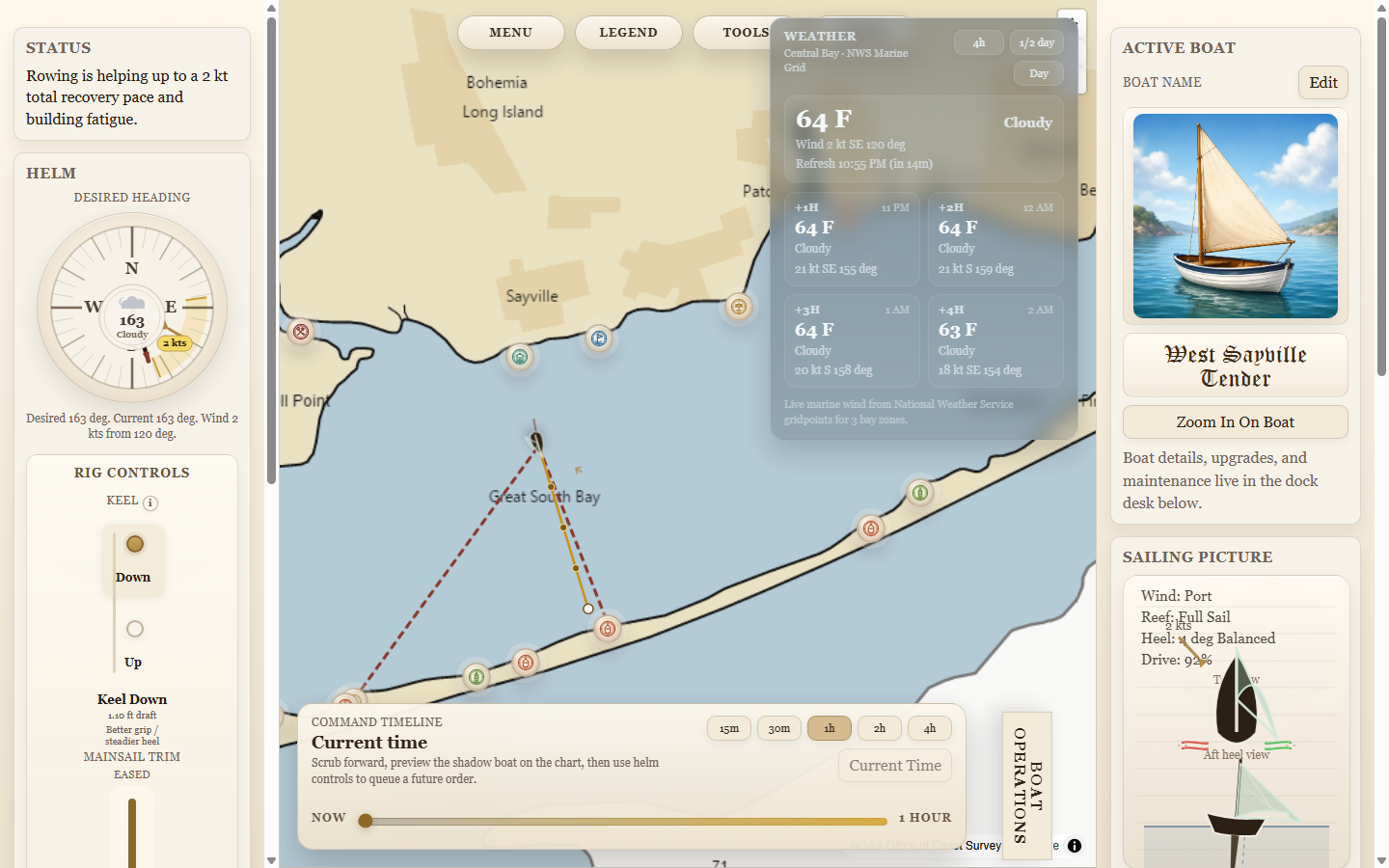
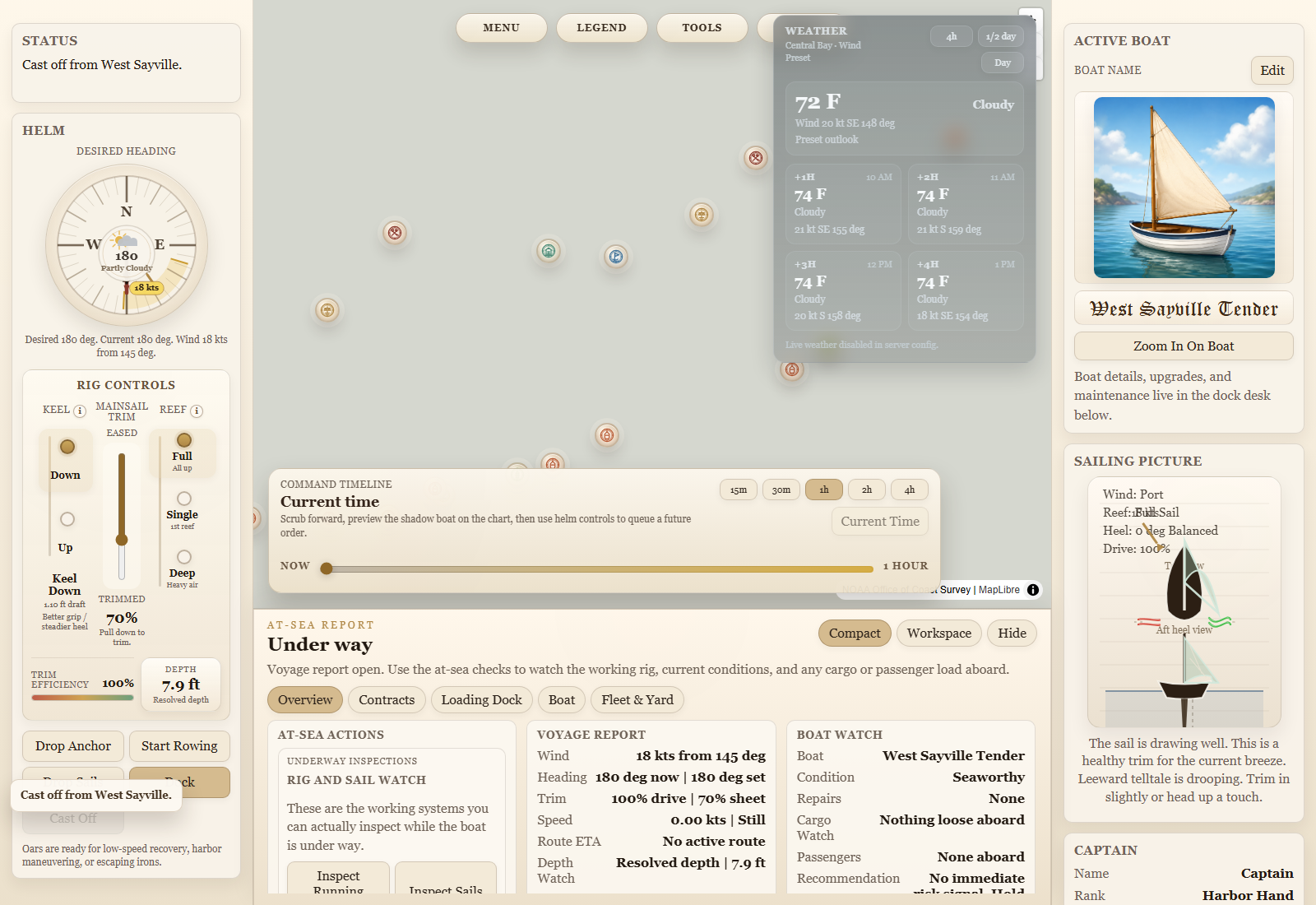
These are all from the newer merged build: chart view, dock workflow, depth-aware helm data, contract readability, and the new at-sea reporting surface.
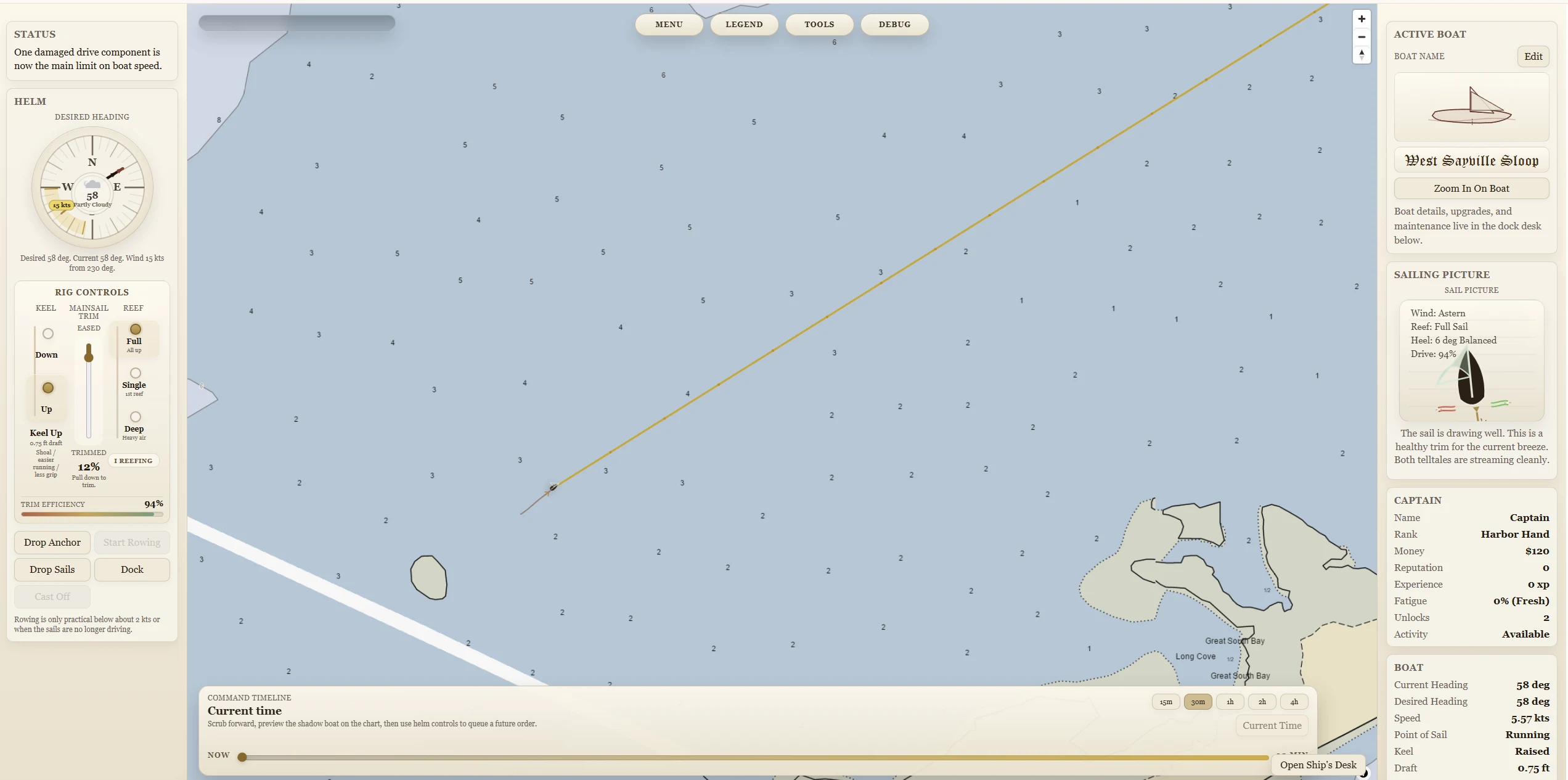
Current bay view
Chart-first map view, dock state, side panels, helm controls, and active boat data working together in one sailing surface.
Weather planning
A floating forecast window now keeps short-horizon wind and sky changes readable without leaving the chart.
At-sea overview
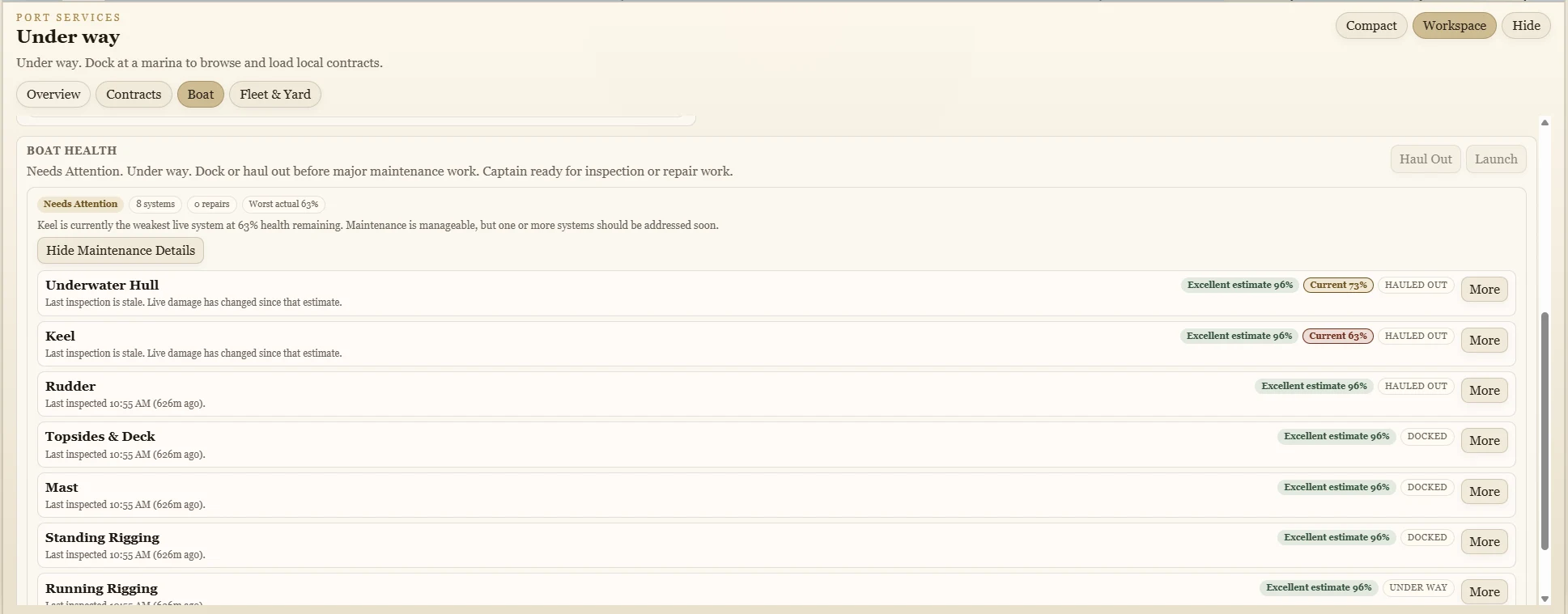
The underway view now keeps voyage report, boat watch, and inspection actions visible without making the player leave the main sailing surface.
Loading dock workflow
Dockside staging, hold packing, passenger seating, and departure prep now live inside the same contract loop instead of in abstract menus.
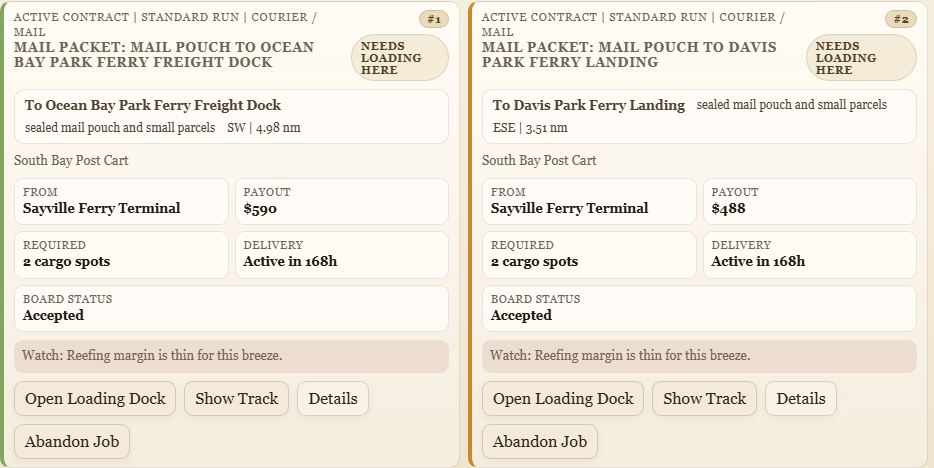
Contract clarity
Per-contract serial labels and cleaner active ledgers make repeated jobs easier to tell apart when the dock gets busy.
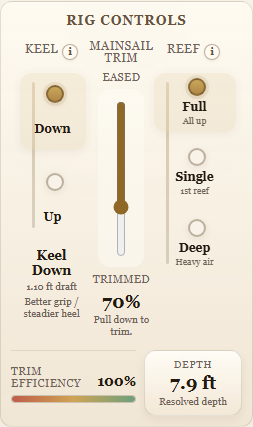
Depth at the helm
The dedicated depth tile brings resolved depth and shoal-water state closer to the same sail, keel, and cast-off decisions that depend on them.
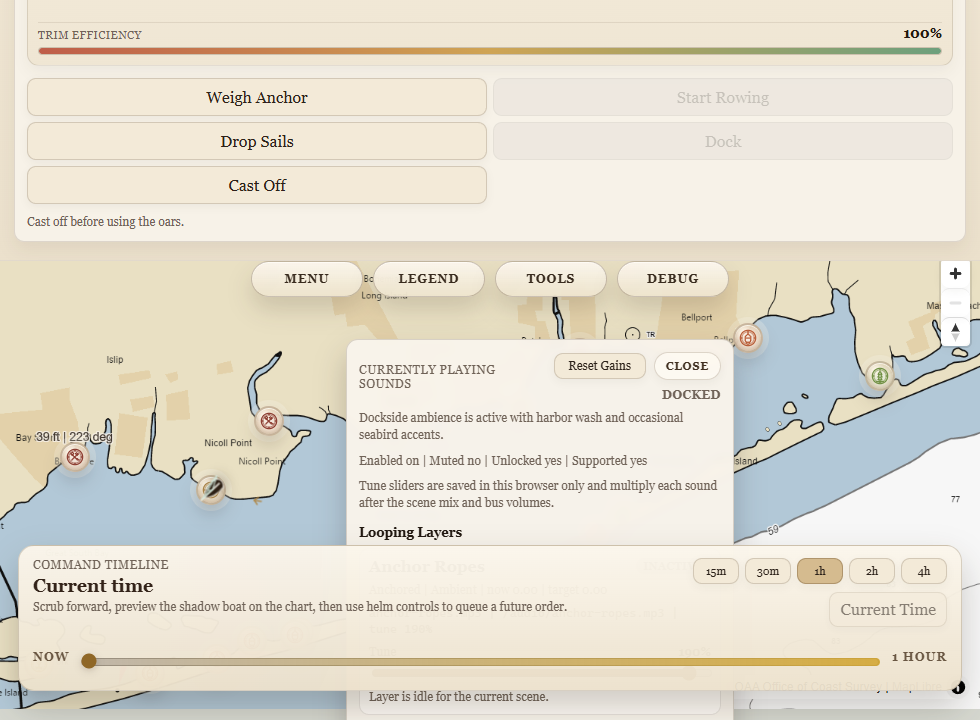
Command timeline
Scrub ahead, preview the ghost boat and projected path, and queue later heading, trim, reef, or anchor orders without needing to stay at the controls every minute.
Damage and repair choices.
Boat damage is meant to stay specific, readable, and tied to what actually happened on the water. Repair is a choice between time, money, parts, skill, and how badly you need to get moving again.
Component damage
Damage should match the mistake
The boat is not just a single health bar. Different parts of the boat can be damaged by different kinds of risk.
Hull damage from hitting docks or hard impacts too fast
Keel damage from shallow water, grounding, or underwater strikes
Rigging damage from high wind, excessive heel, and overpowered sailing
Readable warnings so the player understands what failed and why
Repair tradeoffs
Fix it yourself or pay the yard
Repairs are designed as a gameplay decision, not just a reset button.
Self-repair uses parts and takes real-life hours to complete
Repair quality and speed can depend on captain skill
Shipyard repair costs more money but gets the boat back into service faster
The choice is yours: save money and spend time, or pay more and keep sailing
How the bay grows from here
The near-term path is to keep deepening the Great South Bay loop before stretching farther into broader economy, captain systems, and more regions.
Current foundation
Persistent bay loop
The current merged build already has the core chart-first sailing loop in place.
Great South Bay chart view with persistent elapsed-time sailing
Real weather, chart depths, contracts, loading, repairs, and early progression
Command timeline scheduling, future-order preview, route feasibility, and current dock services
Current runway
Captain readability and harbor clarity
The next pass is about making captain-side decisions, harbor work, and dockside consequences easier to read.
Wind, trim, and Sailing Picture readability polish
Harbor maneuvering and clearer service cues on the map
Longer dockside prep, partial-load flow, and consequence layers around cargo and passengers
Next layers
Charts, tides, and denser bay decisions
Add more reasons to explore, time routes, and work the same bay with better local knowledge.
Exploration-based fog of war and purchasable local maps
NOAA-backed tide charts affecting effective depth and approach feasibility
Loading duration, partial-load flow, and richer dockside consequences
Longer-range direction
Trade, crew, and a wider shared world
Broaden the game beyond one bay by keeping the same sailing-first logic intact.
Trade economy, harbor interaction, and deeper working-waterfront life
Crew assistance, captain progression, and more specialized boats
More Great South Bay stops first, then broader shared-world regions later
Longer-term pillars
The longer-term direction is not just "more content." It is a fuller working-bay life where trade, charts, crew, sound, and boat choice all
reinforce the same persistent sailing loop.
Economy
Trade and cargo as a real loop
Contracts, persistent cargo, and port-to-port trade goods are meant to turn sailing into a working livelihood rather than isolated one-off trips.
Navigation
Tides, currents, and chart knowledge
Route planning should depend on tide height, currents, wind-aware ETA, and map detail that is explored or bought instead of always being fully known.
World
A fuller Great South Bay
More points of interest, harbor traffic, shoreline interaction, anchoring, and tender access should make the bay feel denser and more alive.
Life aboard
Crew, rest, and vessel life
Captain needs, crew assistance, inspections, local observations, and small-craft progression are meant to make the boat feel worked, lived in, and specialized.
Next on the runway
These are the nearest planned development passes, not promises with dates attached.
Helm readability
Sharper captain-side feedback
The next polish pass is about making the live boat state easier to read at a glance while sailing and while planning the next move.
Make wind, trim, and Sailing Picture feedback easier to read
Keep the helm-side signals clear without crowding the chart
Support faster judgment during short bay passages and harbor work
Dockside flow
Longer prep and clearer consequences
Dockside work is moving toward a stronger sense of preparation, partial loading, and real costs for what happens under way.
Loading duration and departure gating for more believable cast-off timing
Partial-load clarity and better dockside state readability
More visible consequences for cargo, passengers, and boat handling mistakes
Local navigation
Harbor handling and chart knowledge
Great South Bay gets more believable when constrained water, local chart knowledge, and map-side service cues all reinforce one another.
Improve low-speed handling and constrained-water sailing feedback
Make upwind and poor-angle limits easier to read near docks and channels
Expand local chart knowledge with fog-of-war and tide-aware planning later
Follow development or raise your hand for testing.
If you want updates on Portbound Seas or want to be contacted about future playtesting, there is now a simple sign-up form.
Updates and testing
Stay in the loop without watching every post.
Portbound Seas is still growing carefully, but you can now leave your email for development updates, future playtest interest, or both.
The form also gives you a place to say whether you come from sailing, simulation games, or both.