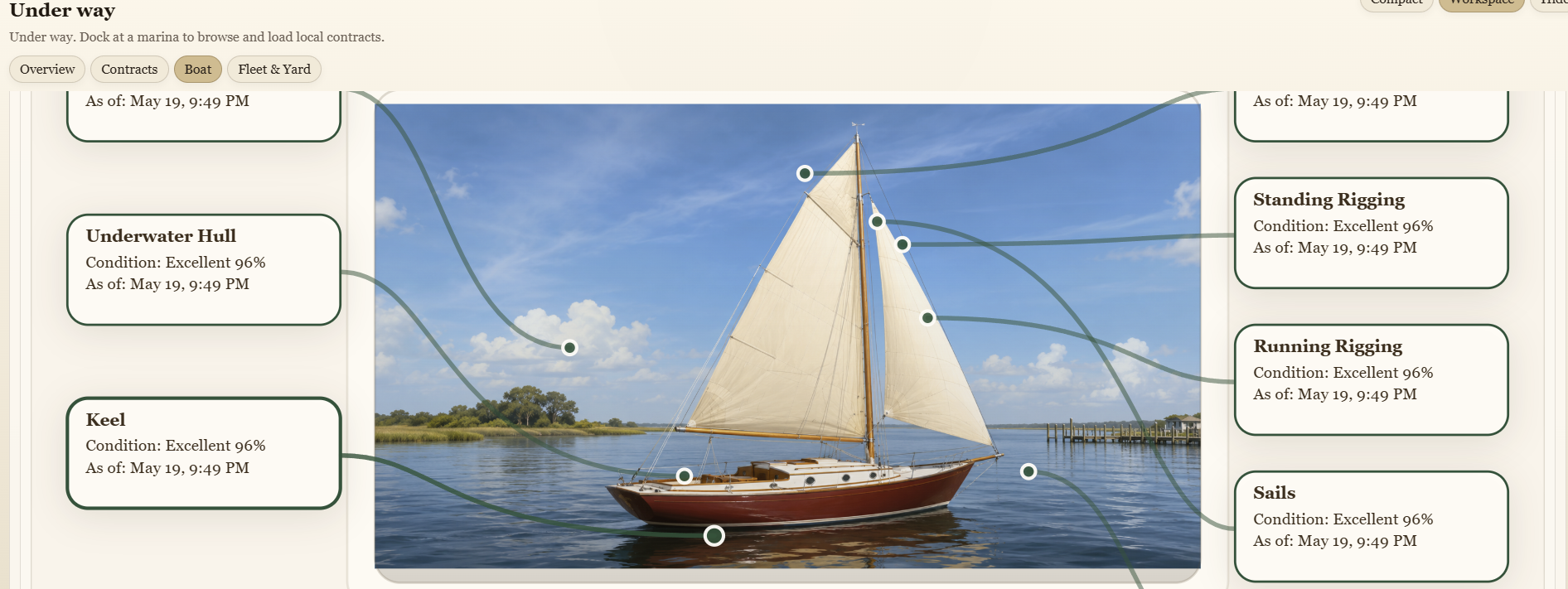
Damage, inspection, and repair choices
Portbound Seas is moving toward a boat-health model where damage is specific, readable, and tied to what actually happened on the water. Repair is not just a reset button. It is a decision about time, money, parts, and risk.
Damage should match the mistake
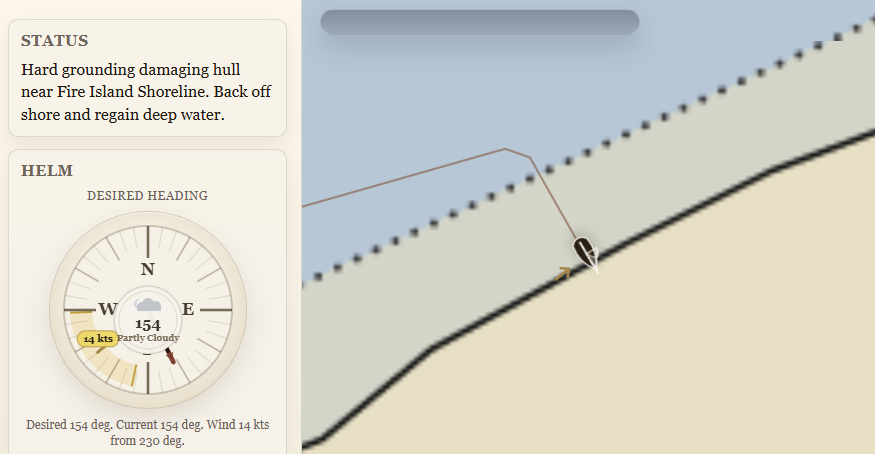
The goal is to move away from treating the boat like a single durability bar. Different mistakes should hurt different systems. Hit a dock too hard and the hull should take the story. Force a shoal-draft boat through shallow water and the keel should take the consequences. Carry too much sail in heavy weather and the rigging should be the part that starts complaining.
That gives the player something more understandable than generic wear. You do not just know that the boat is worse. You know what went wrong.
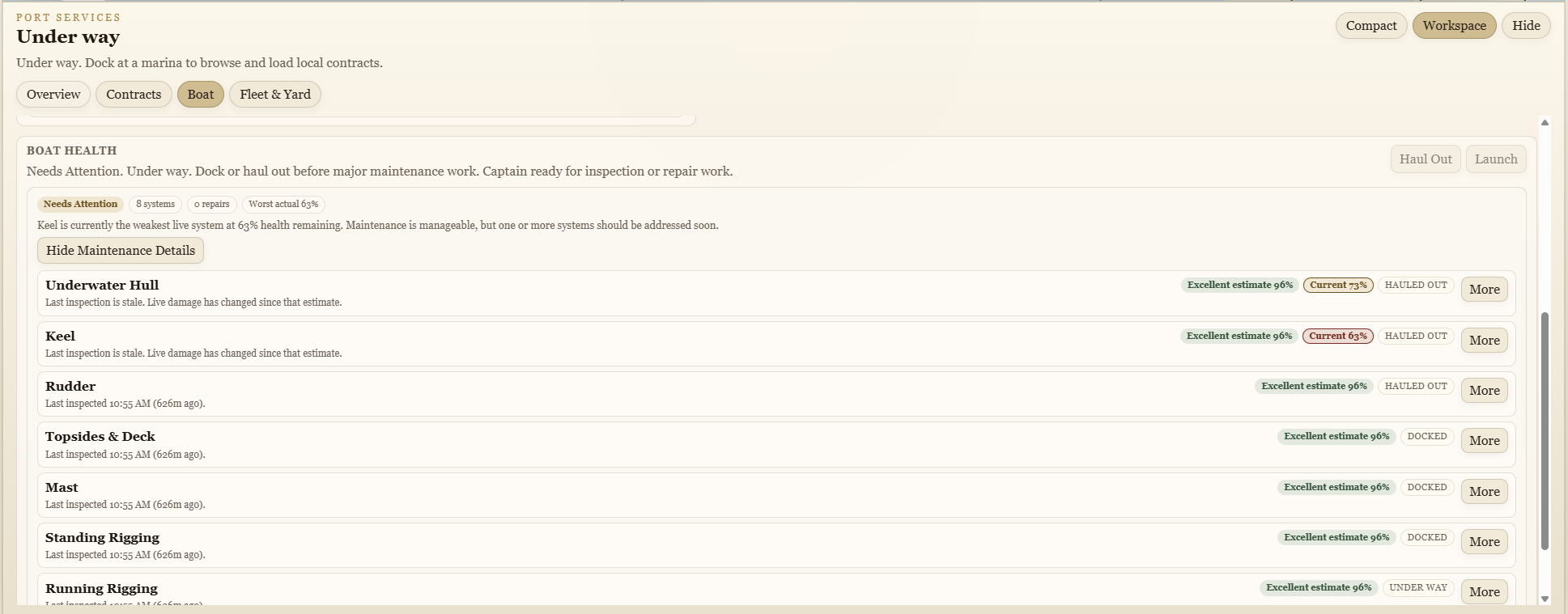
Inspections versus live damage
The repair workflow also opens up a useful distinction between inspected condition and current condition. A yard inspection might tell you the underwater hull was excellent the last time the boat was hauled, but a hard grounding after that should be able to change the live picture immediately.
That makes maintenance feel more like a working vessel and less like a perfect information spreadsheet. You might know the last certified state of the boat, but you still need to respect what has happened since.
Why repair should take real time
Because Portbound Seas is persistent, repair should live on the same timeline as sailing. If the player fixes something themselves, it should take real parts and real-world time to complete. That makes self-repair a meaningful tradeoff: lower cost, but more downtime and more dependency on the captain’s skill.
Shipyard repair is the counterweight. It should cost more money, but it gets the boat back into service faster and with less interruption to contracts and travel plans.
The decision the player gets to make
This is where the system becomes gameplay instead of menu work. Do you save money and spend the next real-life hours repairing the boat yourself? Or do you pay a yard to handle it so you can get back to work sooner? The answer may depend on what failed, what parts you have, how skilled your captain is, and whether a promising contract board is waiting in the next harbor.
The point is not to punish the player for damage. The point is to make damage and repair part of the life of the boat.