Future commands, waiting, and the command timeline
A lot of sailing is not frantic button pressing. Sometimes the real job is to make a decision, commit to it, and then wait while the boat works its way there. Portbound Seas treats that waiting as part of the game, not as dead time.
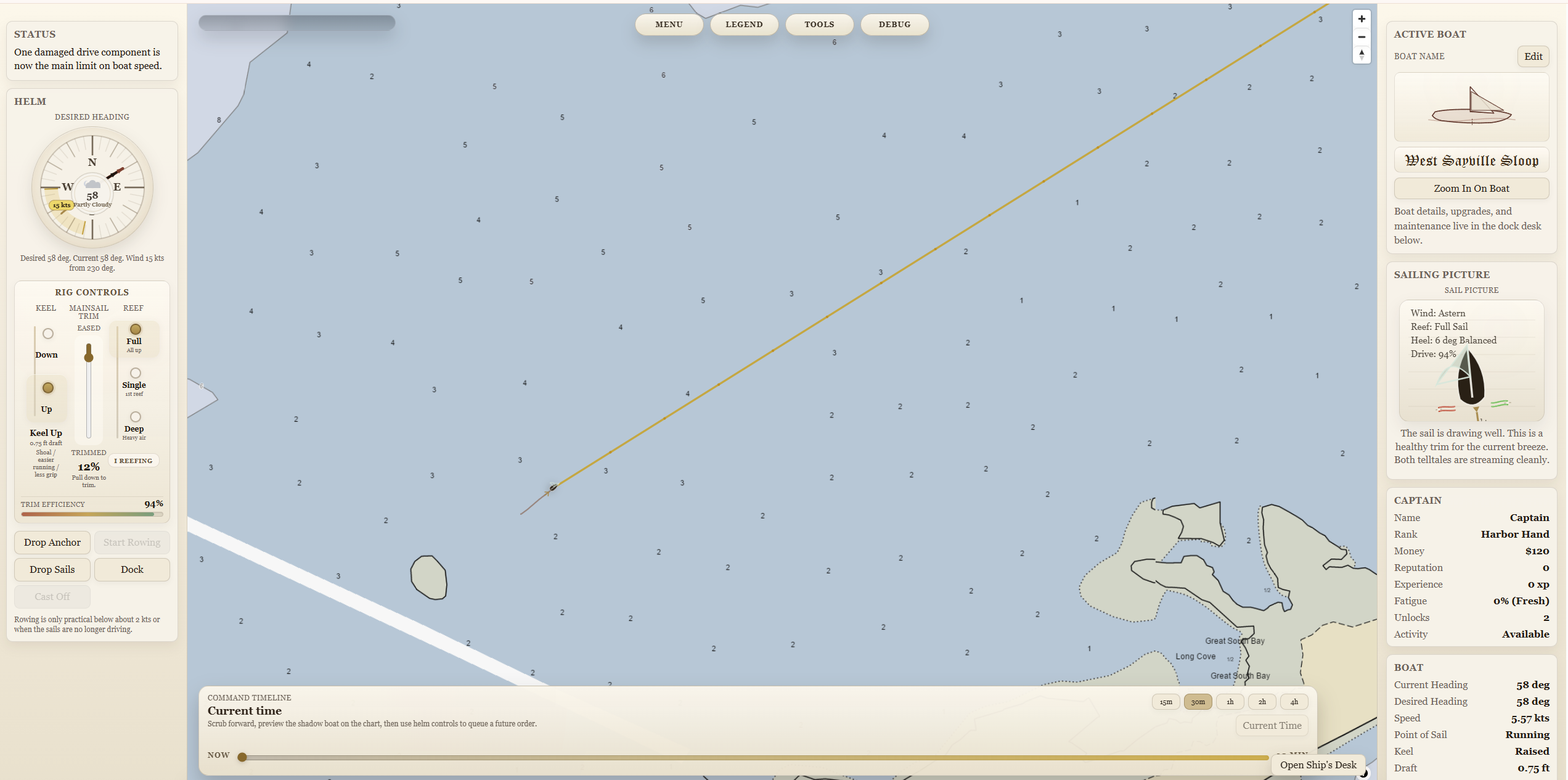
Why this feature matters
In Portbound Seas, the boat keeps moving on real elapsed time. That is one of the core ideas behind the game. A short crossing should still feel like a crossing, and a longer passage should not require the player to sit at the controls every second just to keep the simulation alive.
That creates a very specific design problem: sailing often includes stretches where the right thing to do is wait. Wait for the boat to reach the next point. Wait for the wind angle to change. Wait until it makes sense to reef, trim, or turn. If the world keeps moving while the player is away, the player needs a way to issue the next instruction before that moment arrives.
What the command timeline does
The command timeline is the game's answer to that problem. Instead of treating every control input as something that has to happen right now, it lets the player scrub forward in time, look at the projected state of the boat, and queue a future order for that later moment.
Right now, the future-order system is intentionally focused. The player can queue:
- a future heading change
- a future trim change
- a future reef change
- a future anchor order
That is enough to make a real passage feel manageable without turning the feature into a full autopilot.
How it works in practice
Imagine a simple bay crossing. You cast off, settle onto the first leg, and can already see that the next meaningful decision is not immediate. Maybe you want to hold the current course for a while, then bear away later. Maybe you expect the boat to want less sail once it reaches more open water. Maybe you know that anchoring makes sense after the next stretch, not now.
Instead of staying glued to the helm, you drag the timeline forward, inspect the projected state, and queue the next order there. The live boat does not react immediately. The order waits on the timeline until its time arrives, then executes when due.
The point is not to remove decision-making. The point is to let the player make the decision at the right time for a persistent world, even if they are not planning to remain at the controls for the entire wait.
Why the preview has to be trustworthy
A system like this only works if the player trusts it. If the ghost boat, projected path, and queued markers do not agree with one another, the whole feature stops feeling like seamanship and starts feeling like guesswork.
That is why the preview side matters so much. The projected ghost boat and path are not decorative. They are the player's way of checking, "If I leave this order here, what am I actually asking the boat to do later?"
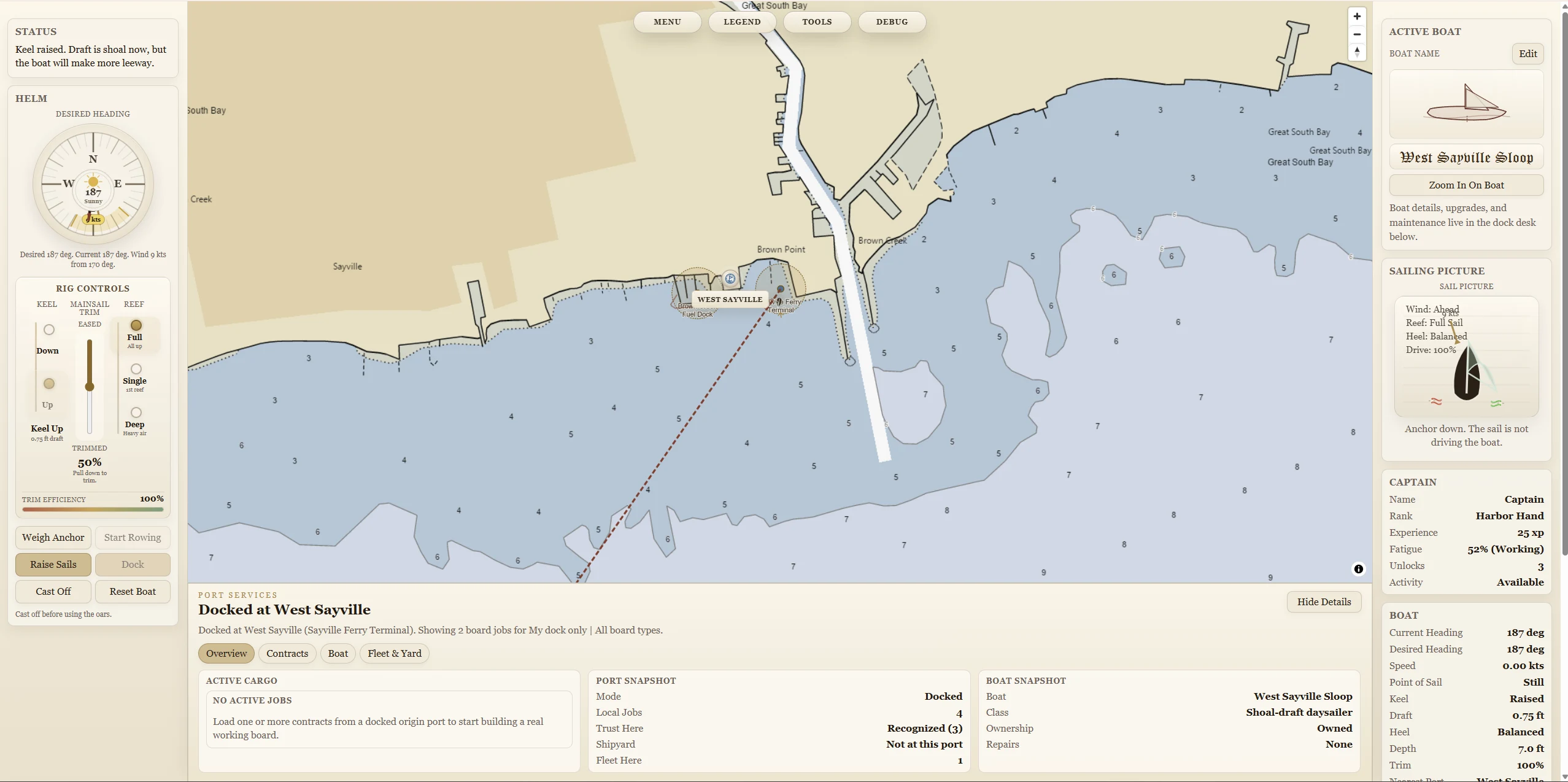
Why trust matters
A feature like this depends on the preview feeling dependable. If the ghost boat, projected path, and queued markers do not agree with one another, the player stops using the timeline as seamanship and starts treating it like a gamble.
That is why later follow-through on the preview behavior mattered so much. The timeline is only useful if the player can scrub forward, look at the ghost route, and trust that the projected future state is actually worth planning around.
What this is not
This is not a one-click route solver, and it is not meant to play the game for you. The player still owns the passage plan. Wind, depth, local geography, boat condition, and bad judgment can still turn a scheduled order into a poor choice.
That is intentional. Portbound Seas is trying to support persistent sailing, not erase it. Future commands help you plan through the waiting that real sailing creates. They do not make weather, water, or timing irrelevant.
Why it fits this game especially well
Great South Bay is a good home for this feature because so much of the game depends on timing and local conditions. A player may want to shape the next turn, watch how the route develops, and then leave the boat to continue its small working passage. The command timeline gives the player a way to do that without pretending that every meaningful decision happens instantly.
That is one of the things that makes Portbound Seas feel different to me. The game does not just ask, "Can you steer the boat right now?" It also asks, "Can you think ahead well enough to leave the boat with sensible orders while the bay keeps moving?"