Hyper-local sound: when weather and seamanship become audible
One of the quieter strengths of Portbound Seas is that the bay does not just look different from state to state. It sounds different. Rain sounds rainy, stronger wind sounds windier, being docked feels different from being under way, and poor trim can complain at you instead of staying silent.
Why this matters in a persistent game
Portbound Seas is meant to be lived with, not just clicked through. That makes sound unusually important. The audio has to help the bay feel inhabited without becoming exhausting during longer sessions. It also has to carry information that the player can feel before they stop to inspect another panel.
Real weather should become real sound
The current audio framework already treats weather and movement as real state, not decorative effects. If it is raining, rain can enter the mix. If the wind is stronger, the wind layer can strengthen. If the boat is moving through the water, the soundscape shifts toward underway motion instead of staying like a quiet harbor loop all the time.
Docked, anchored, and sailing should not feel identical
One of the best things sound can do is make location and state legible without a pop-up. Docked ambience, anchored stillness, and underway sailing are different situations, so they should not feel like the same audio loop with a different label attached. That difference helps the bay feel physical, not abstract.
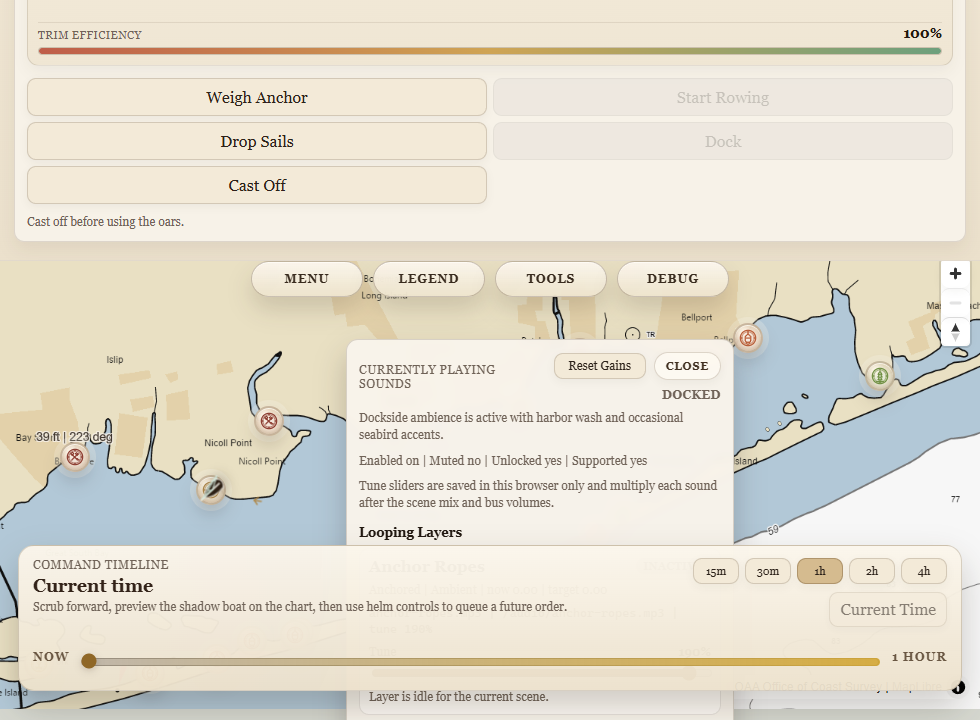
Even the transition into docked ambience matters. The recent dockside audio passes were about making arrival feel more natural instead of snapping from sailing sound into a hard-cut harbor loop.
Poor trim should be audible
Sound is also useful when it acts as seamanship feedback. If the sail is luffing, the player should be able to hear that something is wrong. If trim improves, that complaint should settle down. The same goes for shallow-water warnings and grounding moments: they should sound like consequences, not only numbers changing somewhere else on the screen.
A whole extra dimension
This is one of those systems that changes how the game feels more than a screenshot can show. A believable soundscape turns weather into atmosphere, trim into feedback, and local state into something the player can perceive more directly. It gives the bay another dimension without having to add more UI clutter.