Rowing and human-power maneuvering
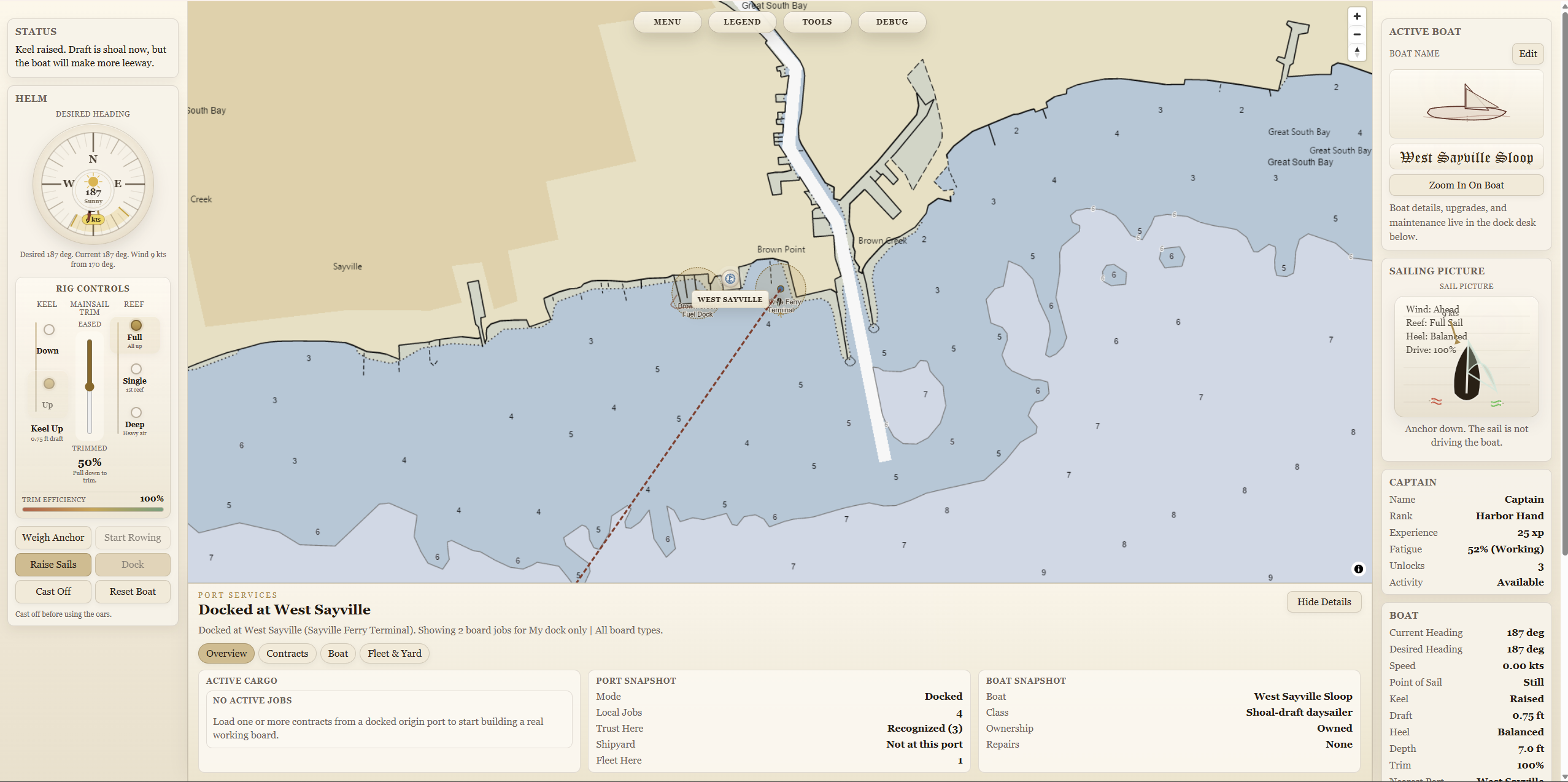
An age-of-sail game still needs a way to deal with dead air, tight docks, and awkward harbor situations. The answer in Portbound Seas is not an engine. It is limited human power.
Why this matters
If a sailing game has no fallback at all, low-wind situations become frustrating rather than interesting. But if the fallback is too strong, the game starts behaving like a motorboat simulator. The design target for Portbound Seas is the narrow space in between.
Human power as a seamanship tool
Rowing is there to support recovery, not erase the value of sail planning. It helps the player get off a lee shore, creep toward a dock, or recover from bad wind in a confined space. It should feel like effort, not free speed.
Why this fits the rest of the game
Because the game is persistent and route-based, small maneuvering decisions matter. A boat that can barely nurse itself into position with human power feels more believable than a boat that simply waits forever or magically accelerates under invisible engine thrust.
The intended feel
The feature should help most in the exact situations sailors would expect: very low wind, close-range positioning, and constrained water. It should still be slower, less efficient, and more limited than proper sail power. That way sail choice, harbor approach, and timing remain the core of the game.