Weather planning and dock-side clarity
Recent work in Portbound Seas has focused on readability and trust: better short-horizon weather planning, clearer repeated-contract labels, more dependable dock workflow buttons, and a gentler audio transition when a boat settles back into harbor.
Short-horizon weather belongs on the chart
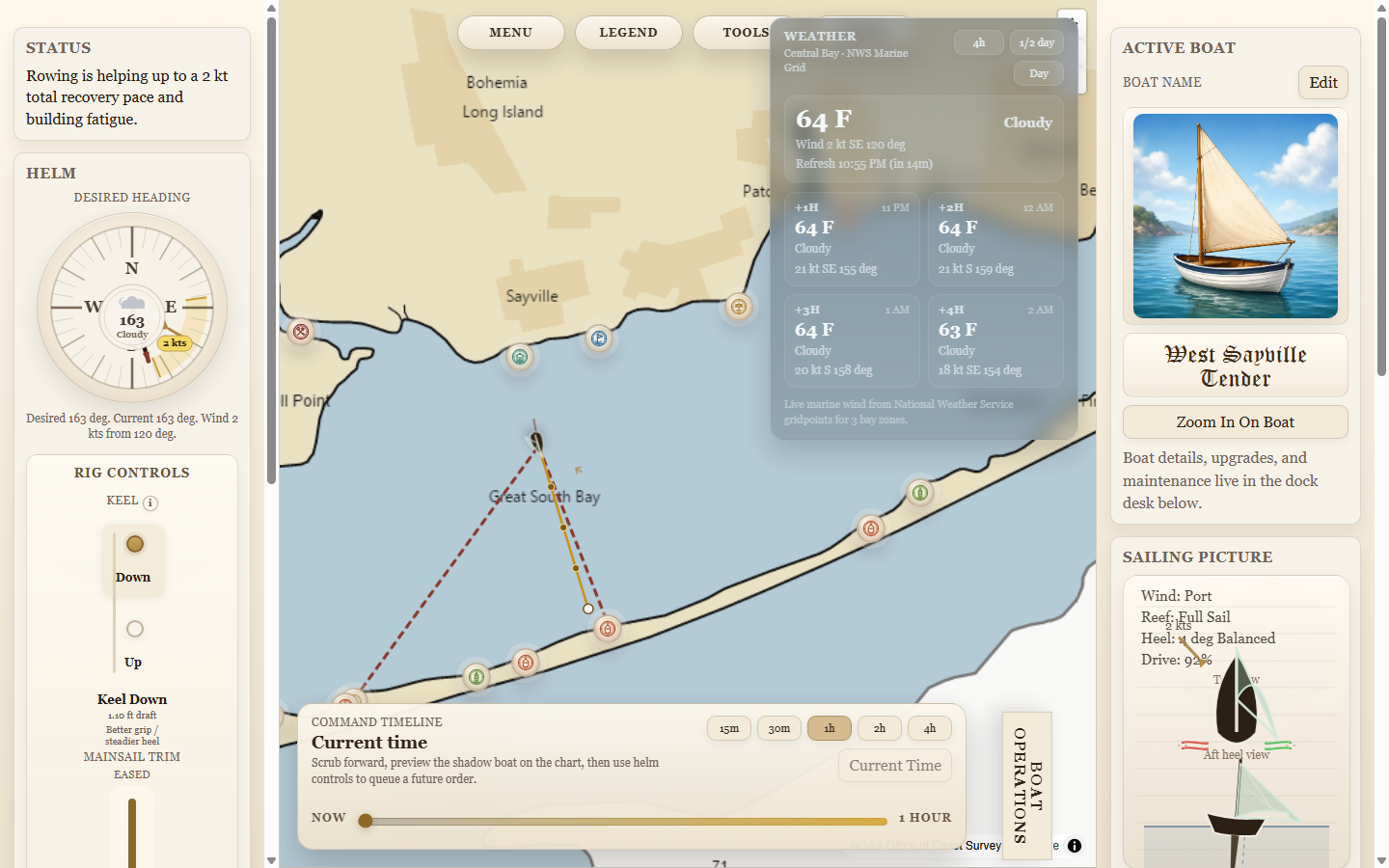
The newest visible addition is a compact weather window in the top-right of the map. It shows the current weather block plus four forecast chunks, with quick views for the next 4 hours, half day, and day. That makes it easier to judge whether the next leg looks manageable before casting off or before deciding when to come back and issue the next order.
This is not an autopilot or a route solver. It is a planning aid for the same sailing-first loop the game already has: read the weather, read the bay, then decide whether to leave now, wait, reef early, or choose a different job.
Repeated jobs are easier to track now
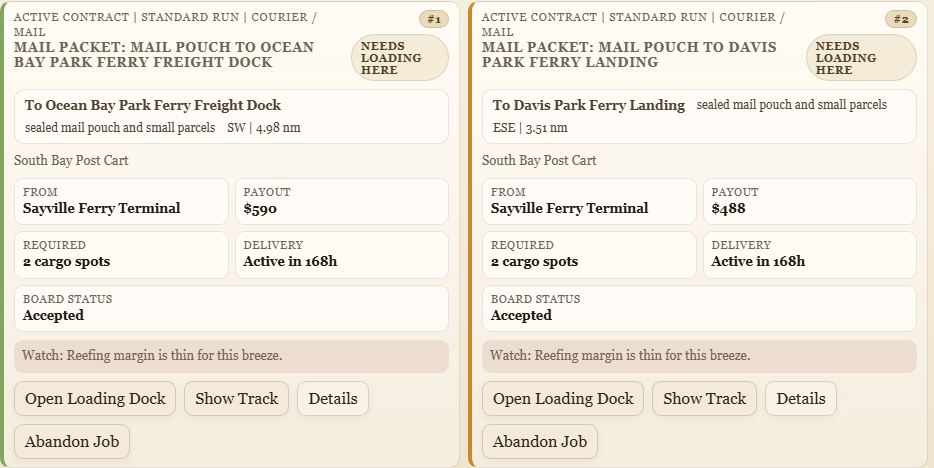
Contract-heavy docks can offer multiple jobs with nearly identical cargo names. The current build now adds compact serial labels like #1 and #2 to active contract cards, linked cargo, and boat inventory. That sounds small, but it removes a real point of friction when loading, unloading, and verifying that the right cargo belongs to the right contract.
Dock workflow should feel dependable
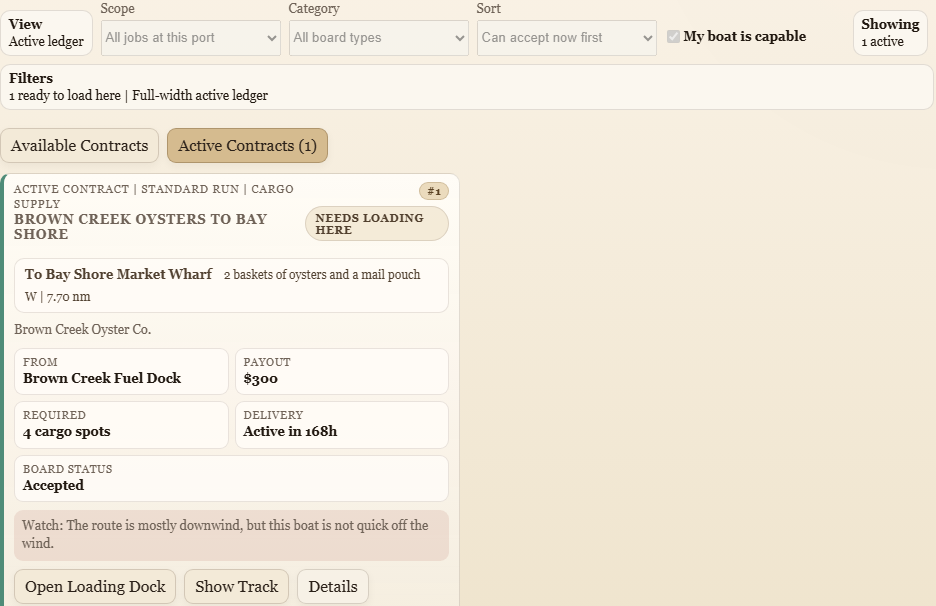
Another recent pass hardened the contract and loading-dock buttons so a first intentional click behaves like a first intentional click. Nearby view switches, detail toggles, and primary actions now use the same more reliable interaction path rather than feeling like they ignored the player and needed to be pressed again.
The dock return also sounds smoother now. Instead of snapping straight from underway ambience into the steady harbor bed, the game fades into dockside audio more gently when the boat settles back in.
What this changes in practice
These updates do not try to turn the game into something broader overnight. What they do is make the current playable bay easier to read, easier to trust, and less fussy to operate while the next sailing and harbor passes continue to deepen the same Great South Bay loop.